Applications
Natural stone, put to work.
Matka travertine, Sivec marble and Croatian limestone are supplied for façades, interior walls and floors, bathrooms and spas, pools, stairs, retail counters, kitchens and bespoke pieces.
Every application starts from the block, with the cut, finish and format chosen for the way the stone will be used.
 01
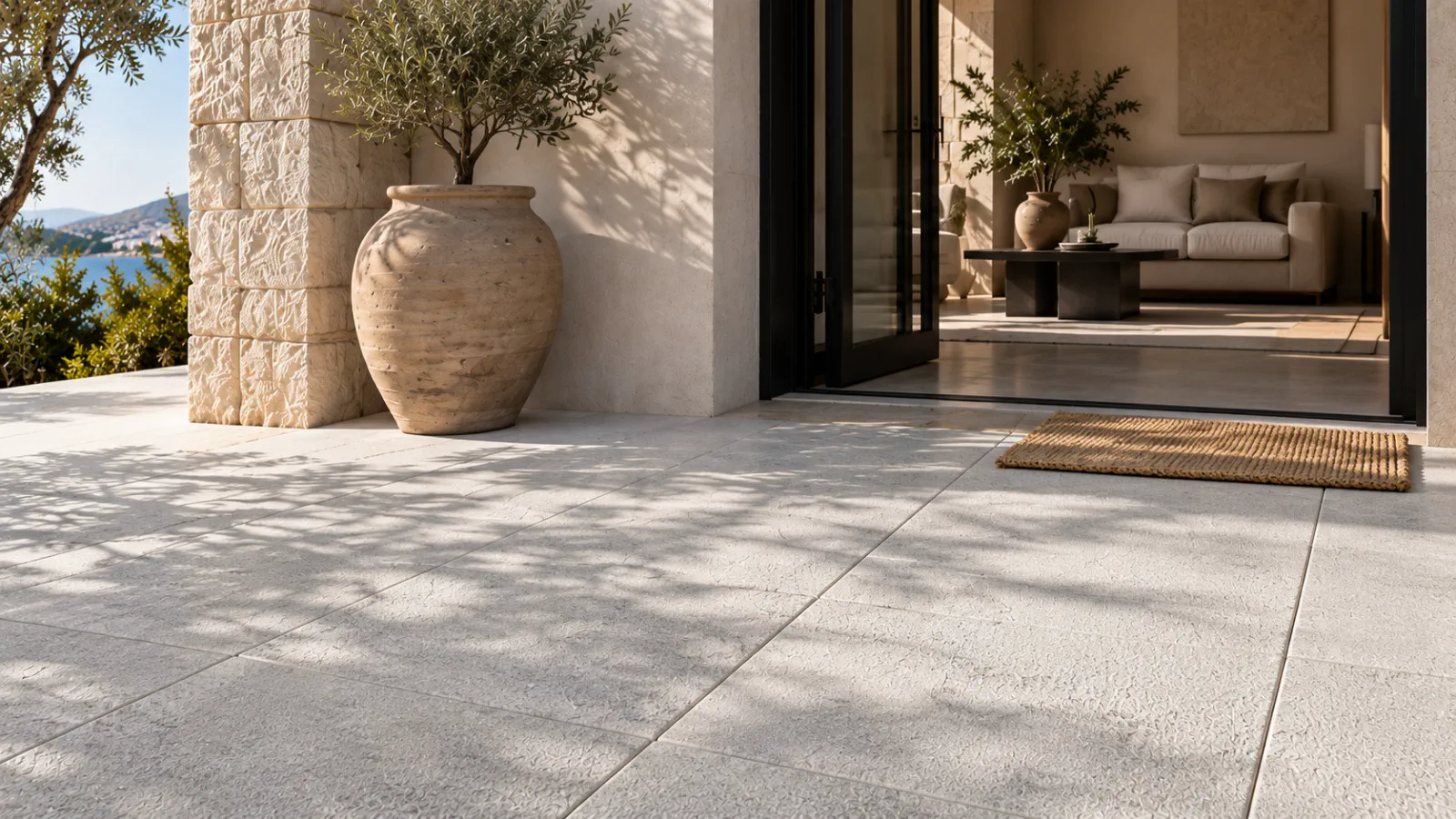
Facade cladding
Stone that meets weather, light and time on the outside of a building.
Ventilated and adhered facade systems in limestone, cut to the architect’s setting-out drawing.
Panels are sequenced from the block so the grain runs continuously across an elevation, and finishes are selected for how the surface will read in raking sunlight rather than under showroom light.
 02
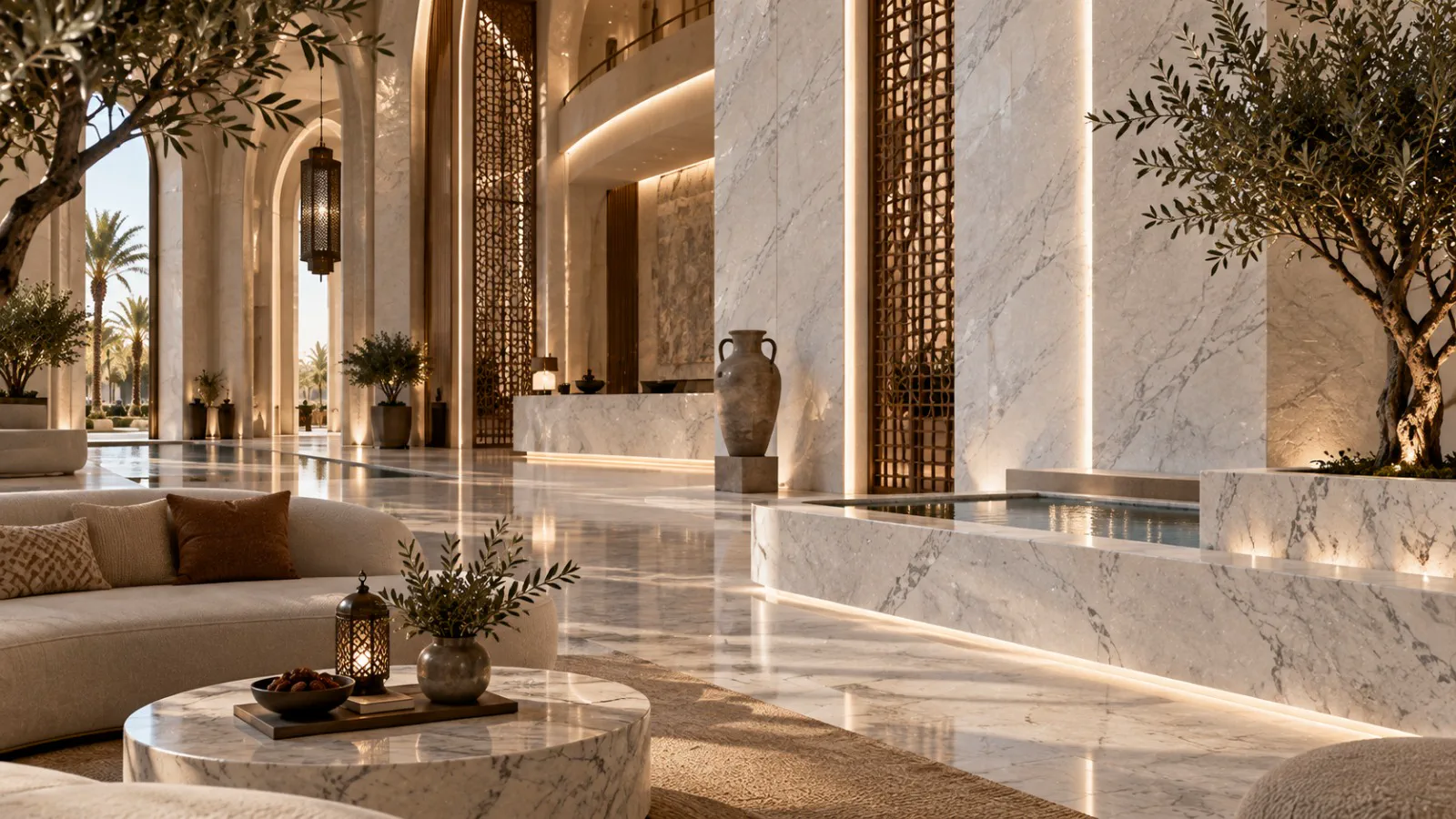
Interior surfaces
Continuous walls, floors and thresholds where the stone is the architecture.
Full-height cladding, flooring, stairs and monolithic details for lobbies, residences and hospitality interiors.
Bookmatched and sequenced Sivec marble is laid out against the drawing before cutting, so a wall arrives as one continuous surface instead of a grid of unrelated panels.
 03
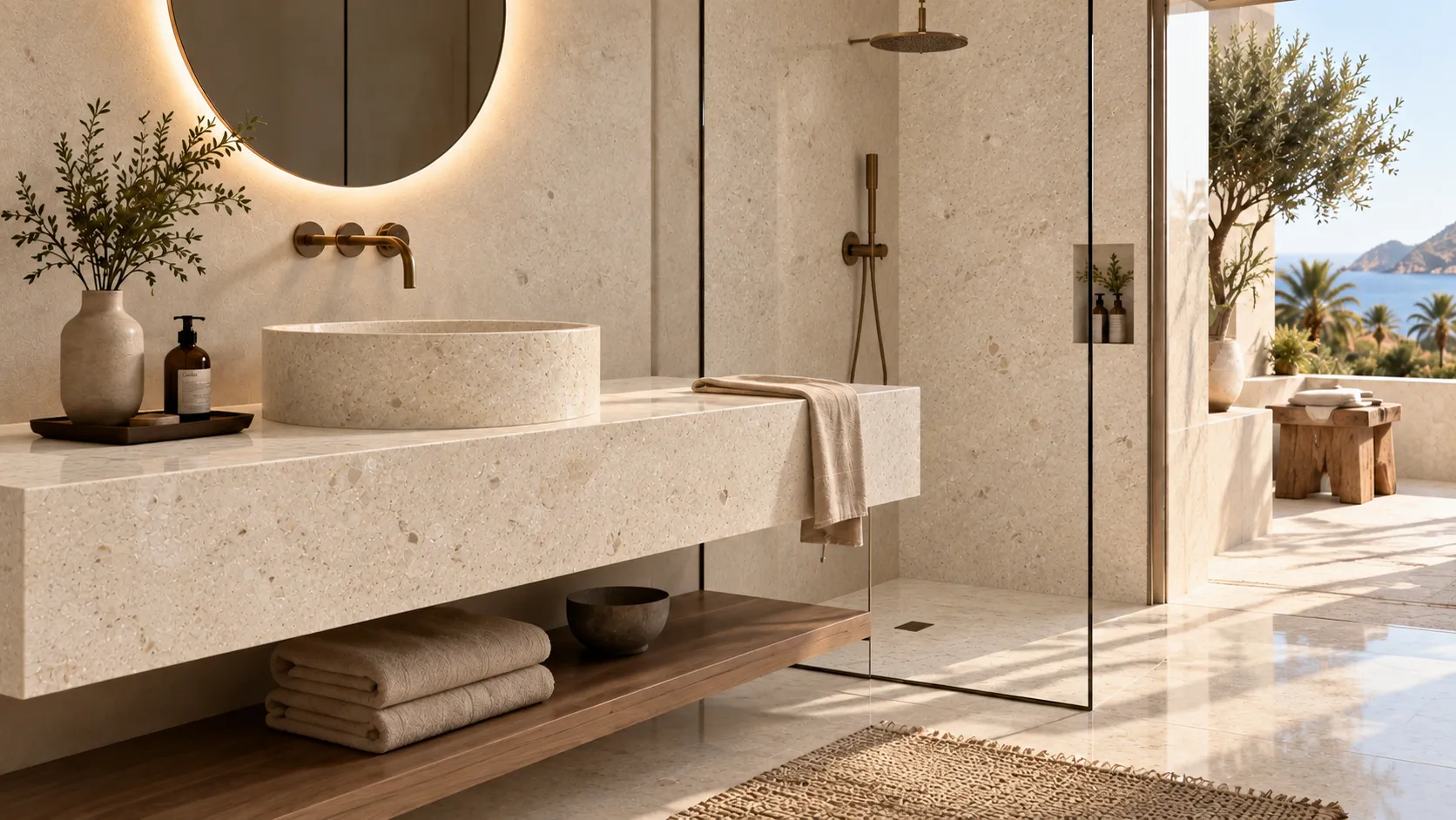
Wellness & spa
Warm, tactile stone in the places where it is touched most often.
Limestone for wet environments: basins, benches, niches and full surrounds.
Finish selection matters more here than anywhere else: brushed and honed surfaces keep their grip and their warmth underfoot, while the stone’s close, even grain stays easy to keep clean where water sits on it daily.
 04
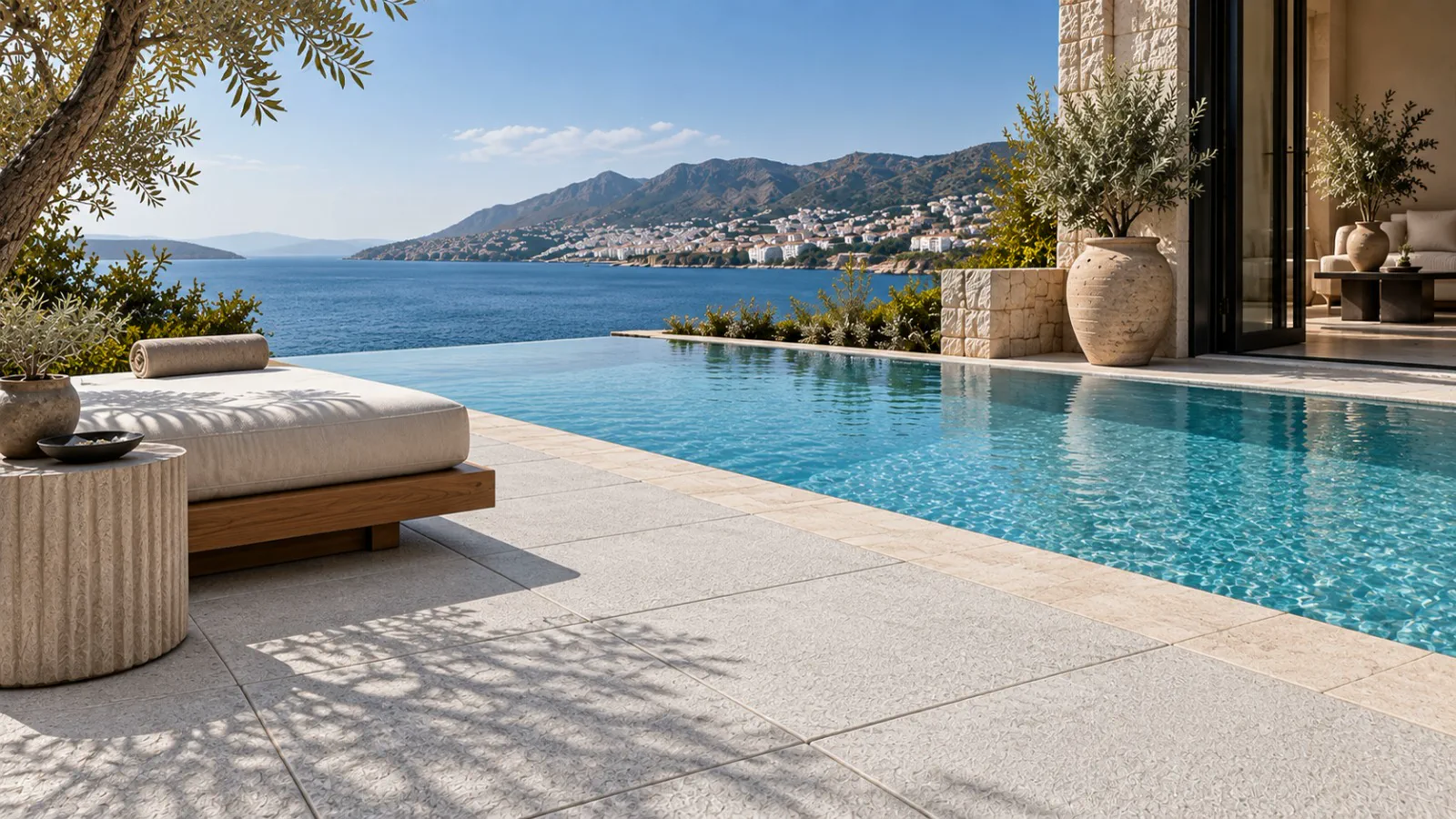
Pools and water features
Where the edge of the water is also the edge of the stone.
Pool capping and fountains in limestone, cut to whichever coping profile the detail asks for and finished for grip rather than shine.
Bushhammered and sandblasted surfaces keep their footing wet. Limestone is chosen at the waterline for the warmth it holds underfoot in full sun.
 05
Stairs and thresholds
The place where stone is measured to the millimetre and then walked on daily.
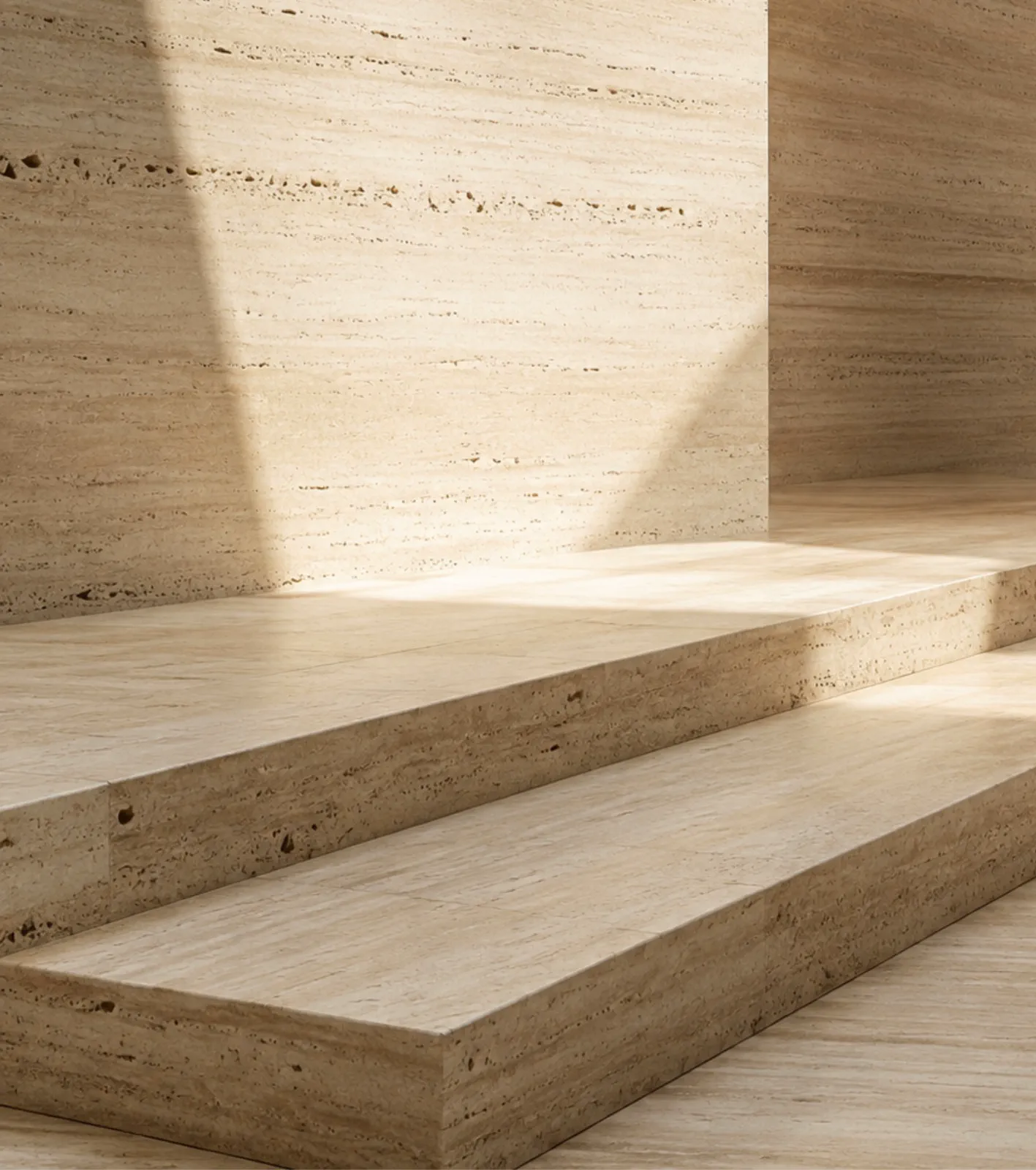
Treads, risers, landings and window sills cut to size from the block, so a flight arrives as a set of parts that already fit each other.
Solid treads are worked from single pieces wherever the detail allows it, and nosing profiles are cut to the drawing rather than adapted on site. Travertine is chosen here for its abrasion resistance, and for a grain that stays even across every tread in the flight.
 06
Bespoke elements
Single pieces, cut from one block rather than assembled from several.
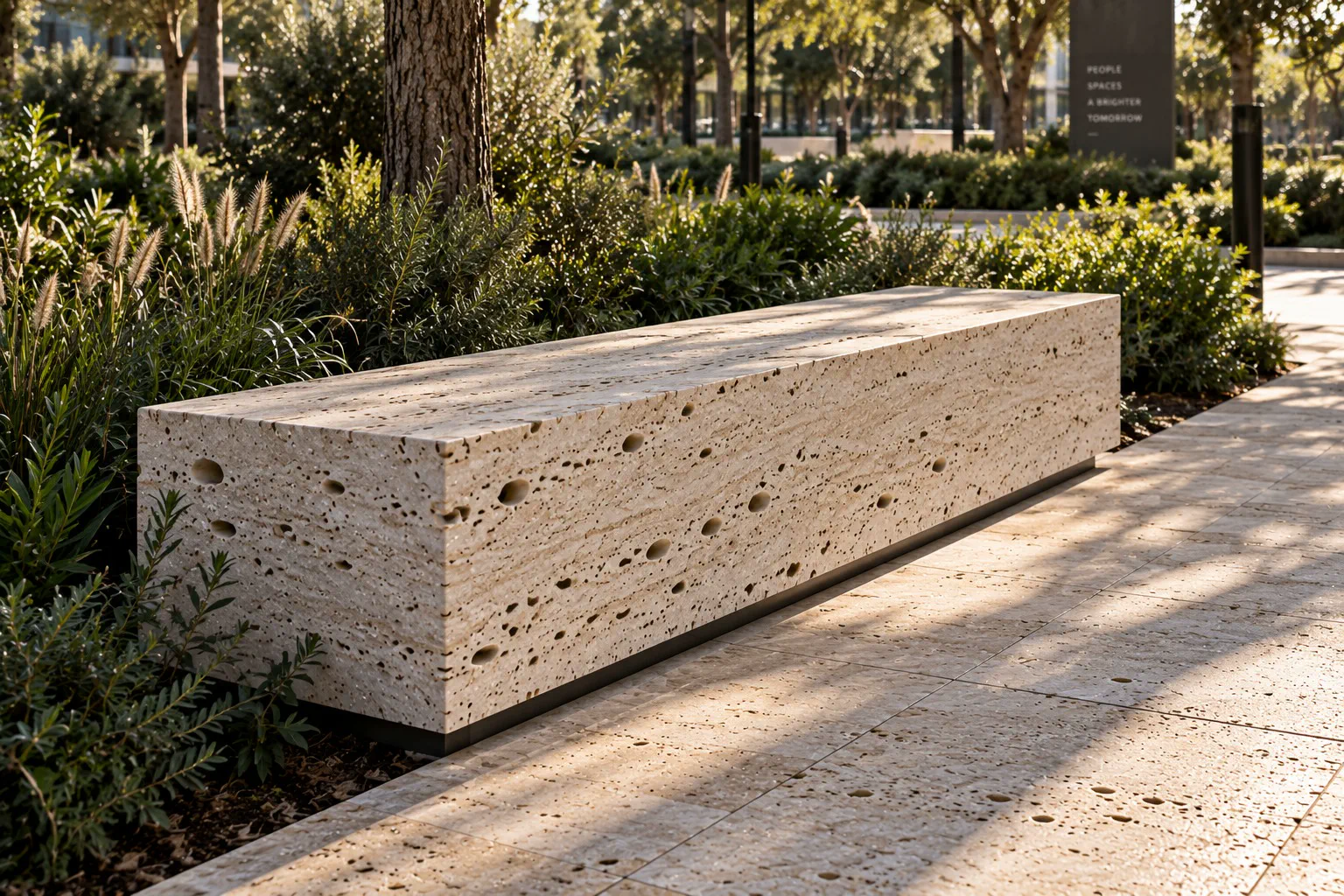
Basins, vanity blocks, countertops and thresholds worked from one piece of travertine on the CNC bridge saw, then finished by hand.
Monolithic work has no joint to hide behind, so the block is selected first and the piece is cut to suit what is actually inside it. It is also where bookmatched pairs begin: the same stone taken from the same block and kept together all the way through cutting.
 07
Retail counters
A single mass of stone, standing where every customer stops.
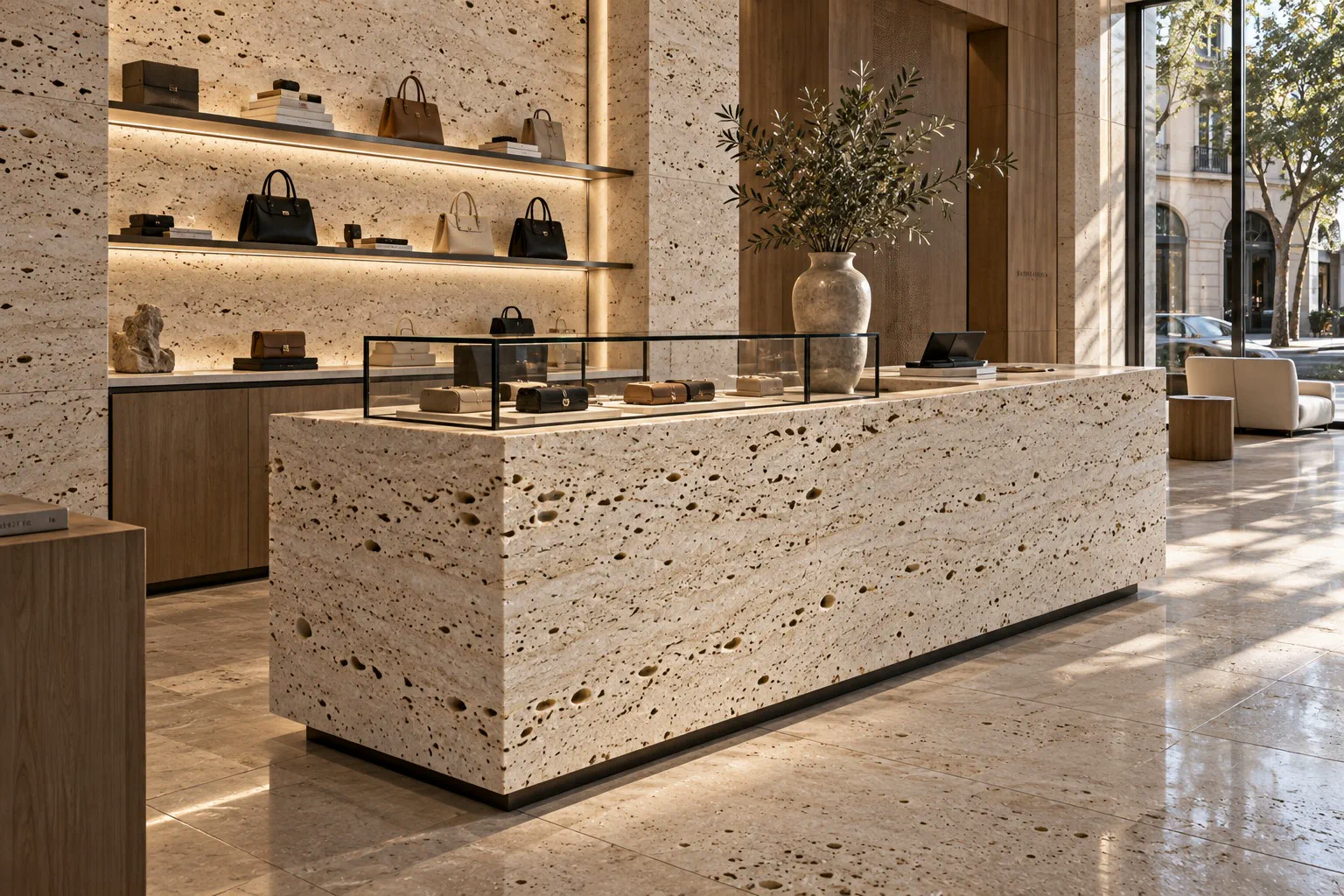
Counters and display plinths worked from thick travertine, with the grain carried around the returns so the piece reads as one mass rather than four panels on a frame.
Unfilled surfaces are specified where the pore is wanted as texture, filled and honed where the top has to stay easy to wipe down. The stone is selected for how it will look under display lighting as well as daylight, because a retail interior is lit twice.
 08
Kitchen islands and worktops
The surface that gets used hardest, cut from the calmest stone.
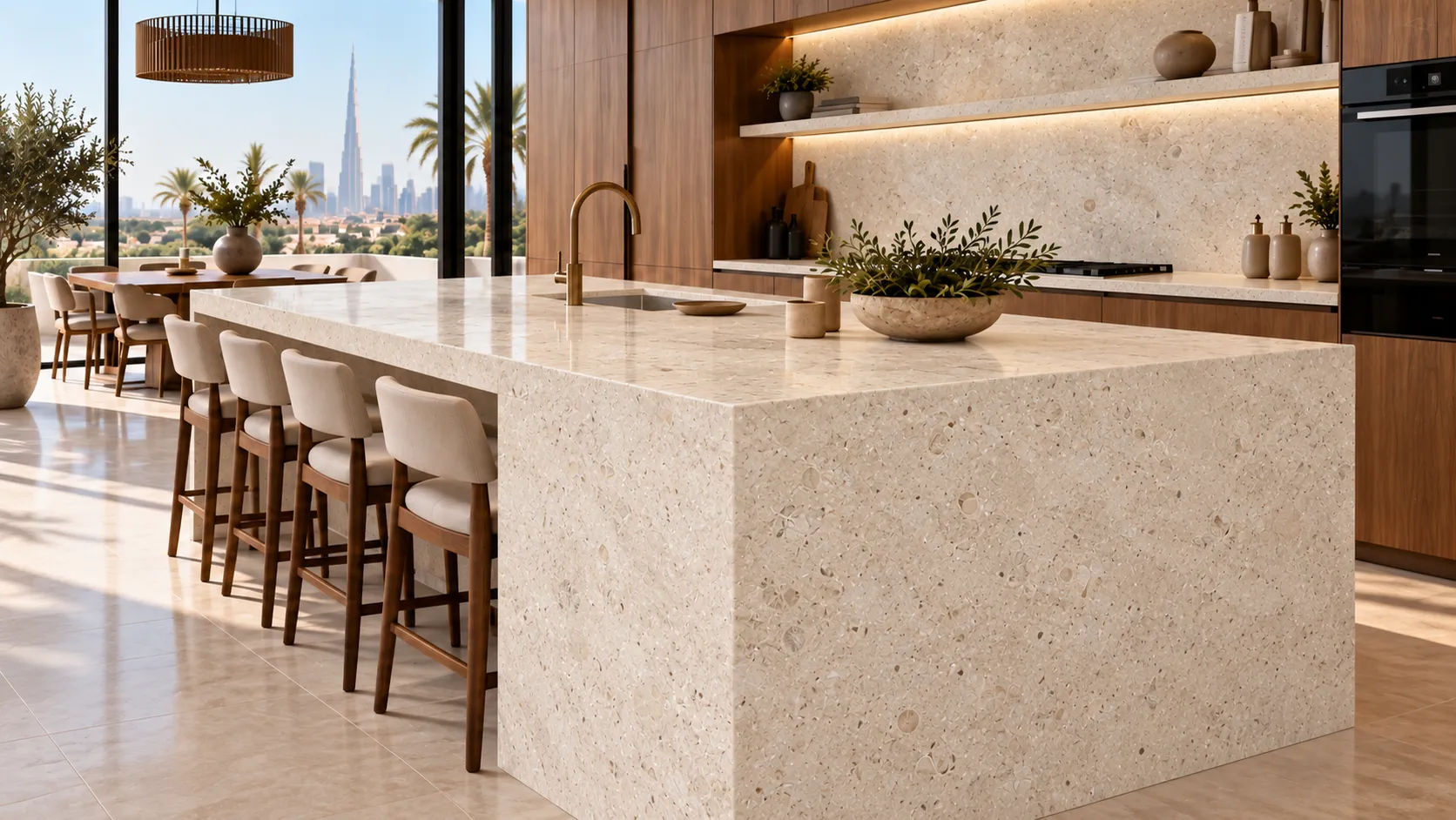
Islands, worktops and matching splashbacks cut to size from the block, with mitred edges so a thin slab reads as a solid section. The island and the wall behind it are taken from the same sequence, so the pattern continues across the room instead of restarting at the hob.
The finish is chosen against the way the room is lit rather than the way it photographs: honed keeps the reflection down, polished keeps the colour up.
Questions buyers ask
Natural stone in use, answered.
Send the drawing, or a few photographs of the space, and the finish you have in mind. We will come back with the right stone, the format and a sample you can hold.
We reply personally by email, with a recommendation and the next step.
What is natural stone used for in architecture and interiors?
Natural stone from SUNMINERALS is shaped into exterior walls, interior walls, floors, monuments, countertops, mosaics, fountains, pool capping, stairs and window sills. Each stone is supplied as blocks, slabs or cut-to-size elements for its own uses.
Matka travertine is supplied for exterior and interior walls, floors, pool capping, fountains, and stairs and window sills.
Sivec marble is supplied for flooring, cladding, bespoke architectural elements, countertops, and stairs and window sills. Croatian limestone is supplied for exterior and interior walls, floors, stairs and window sills, monuments and pool capping.
Which stone suits a façade?
Croatian limestone and Matka travertine are both listed for exterior walls. Limestone façades are supplied for ventilated and adhered systems, cut to the setting-out drawing, with panels sequenced from the block so the grain runs continuously across an elevation.
Which stone suits a pool surround?
Croatian limestone and Matka travertine are both supplied for pool capping. At the waterline the finish is chosen for grip rather than shine, and bushhammered and sandblasted surfaces keep their footing when wet.
Which stone suits a bathroom or a kitchen?
Limestone is supplied for basins, benches, niches and full surrounds, where brushed and honed finishes keep their grip and the close, even grain stays easy to keep clean.
For kitchens, islands, worktops and splashbacks are cut to size from the same sequence; honed keeps the reflection down and polished keeps the colour up. Sivec marble is also supplied for countertops.
Can stone be cut to size for stairs, counters and bespoke pieces?
Yes. SUNMINERALS produces standard slabs, project-specific thicker stone formats and cut-to-size elements. Custom dimensions, surface finishes and edge profiles can be coordinated for large architectural planes and precise interior details.
Bespoke work includes bookmatched slabs, carved, curved and fluted pieces, worked on a CNC bridge saw by Donatoni.
Do you supply private homes as well as large projects?
Yes. Orders can begin from one slab, subject to material availability, so a single bathroom or kitchen follows the same path as a hotel: select the material, approve the sample, then confirm the programme.
How does an order work?
Three steps: select the material, from stock or a quarry source; approve the sample, for material and finish; then confirm the programme for production and delivery. Availability is checked at the enquiry stage, the lead time is confirmed for each specification, and larger orders may require quarry selection or extraction.
The collection
Read the three families by origin.
Travertine, marble and limestone. Each has its own character, its own finishes and its own formats.